
Camerimage 2025: Toruń’s Winter Glow, Lynch’s Dreams & the Cinematographer’s Moment
A week inside a medieval Christmas town scented with gingerbread and lit like a movie set: Camerimage 2025 blends David Lynch retrospectives, bold new work, late-night parties and AI debates into one of the most intimate, essential gatherings for cinematographers.
Camerimage 2025: Toruń’s Winter Glow, Lynch’s Dreams & the Cinematographer’s Moment
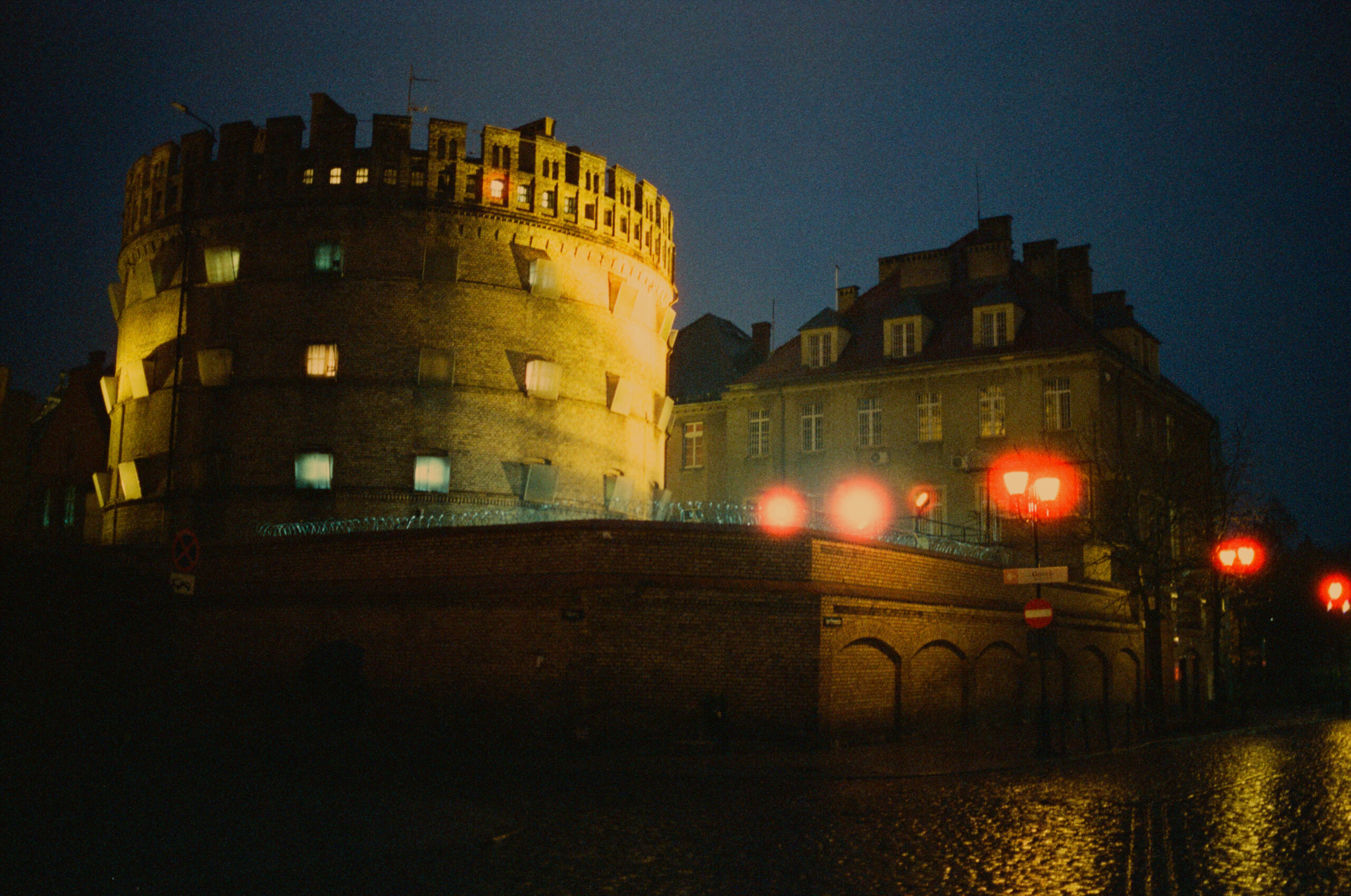
A medieval city taken over by Cinematographers
Each November, as daylight shortens over northern Poland, Toruń starts to slip into its winter rituals. The UNESCO-listed Old Town glows under strings of warm lights. Wooden stalls fill the Rynek, selling wool scarves, carved toys, and mugs of steaming grzaniec. The air is filled with the scent of pierniki — the gingerbread this town has been known for since the Middle Ages.
Camerimage drops right into the middle of that transformation. You step out of a screening, and suddenly you’re in a square lit like a film set: snow flurries, kids decorating gingerbread a few steps from festival posters and panavision crew jackets. The city itself becomes a lesson in contrast and color temperature. Practical Christmas lights, sodium vapor street lights, tungsten-warm windows and cold blue cobblestones. It’s impossible not to think in exposure while you’re just walking to dinner.
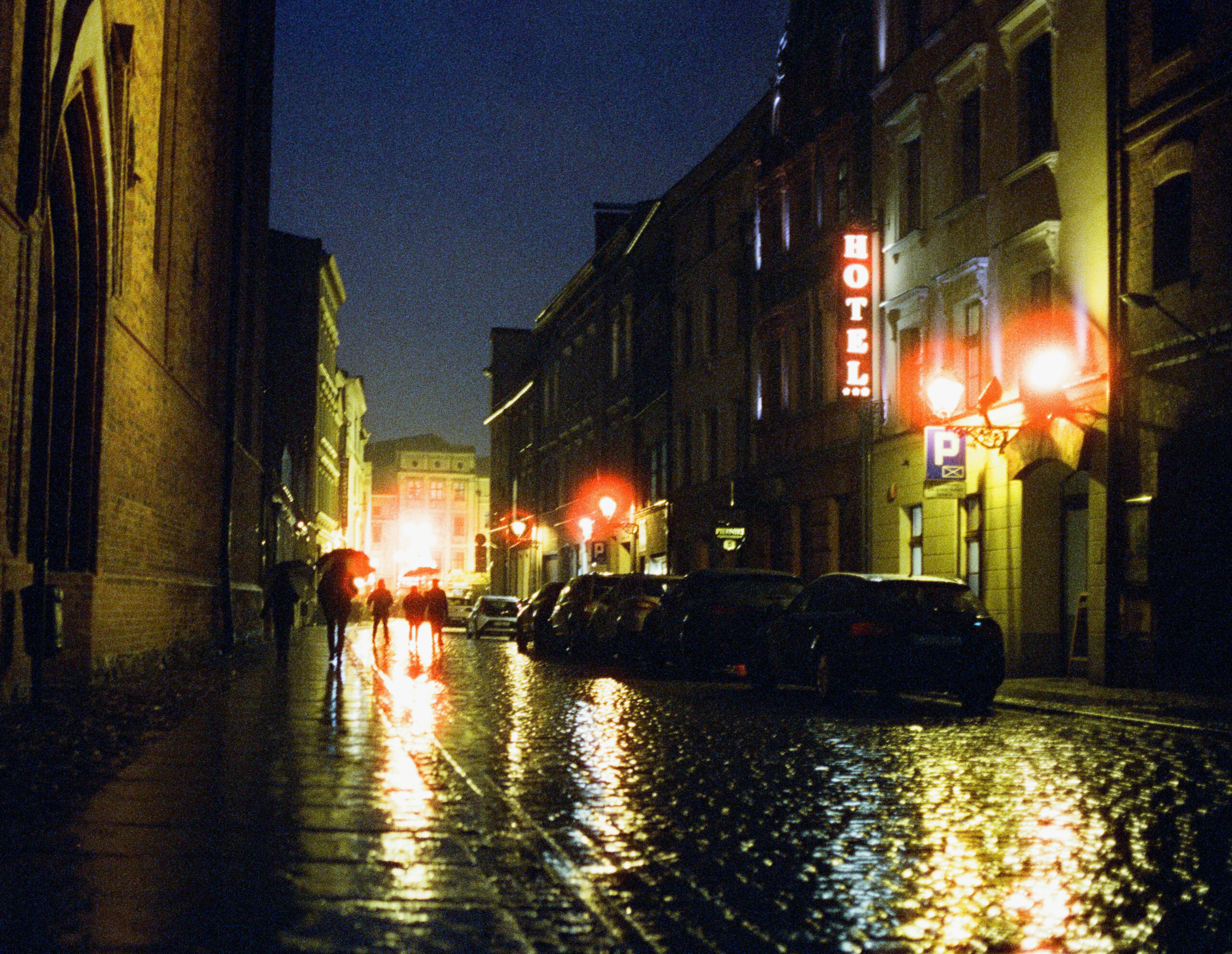
Honoring David Lynch in a City of Shadows
The 33rd edition will be remembered as the David Lynch year. Camerimage built a dedicated retrospective, The World of Imagination of David Lynch, spanning through Lynch's world featuring experimental shorts, music videos, day in the life style videos, feature films and transcdental meditation workshops .
Every film at the festival followed a ritual: the house lights fall, a short or experimental piece of David's would play after twenty minutes of festival sponsors and then the main feature begins. Watching his work in that context, back-to-back, you feel how deeply unique Lynch was as a human and problem solver.
Where the Day Turns to Night: Rosco's Annual Bar Hopping, Kodak Aperitivo & NRD Parties
As much as Camerimage is about screenings and seminars, the festival truly lives in the hours after the last Q&A wraps. Toruń at night becomes a moving constellation of crew from around the world bouncing between parties, bars, and pop-up parties.
One night it’s bar hopping with the Rosco crew, weaving between tiny Old Town spots where gaffers and colorists are arguing about gels and LED spectra over vodka shots. The next evening, you’re at an aperitivo hosted by Kodak, sipping Negronis and talking film stocks with people who will probably be grading your projects in a few years.
The most surreal moment of the week might have belonged to NRD, when a rumor about “a surprise DJ later” turned into Robbie Ryan stepping behind the turntables. One minute you’re crammed into a bar full of DPs and gaffers, the next the Oscar-nominated cinematographer is spinning in a sweaty, joyfully unpretentious dance floor set.
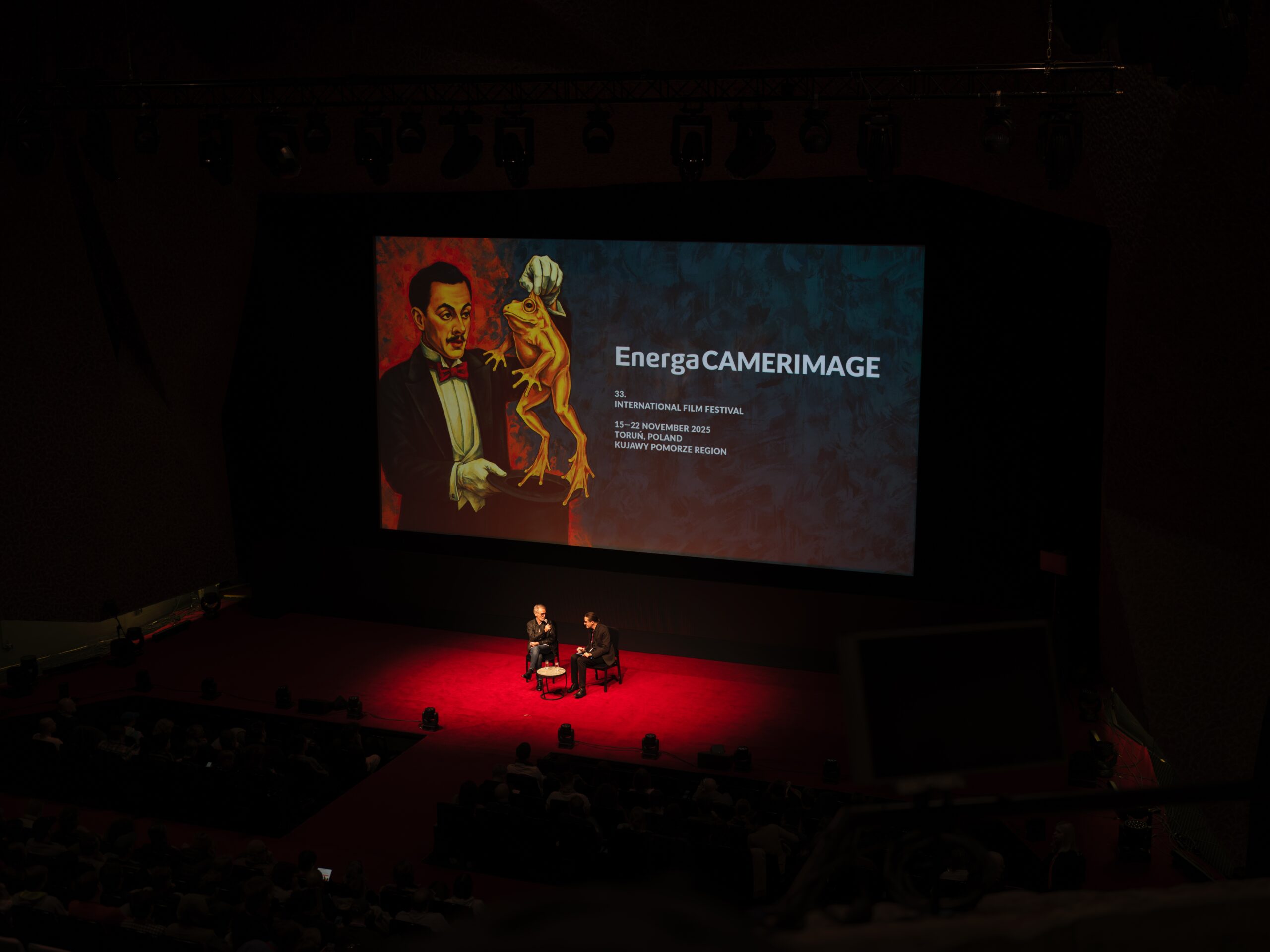
Main Competition: Cinema as Visual Voice
The Golden Frog remains one of the most respected cinematography awards in the world, often a bellwether for the Oscars. This year’s jury, led by Bradford Young, ASC, leaned into work with strong visual authorship and emotional clarity.
2025 Main Competition Winners
- Golden Frog — Late Shift, DP Judith Kaufmann
- Silver Frog — Sound of Falling, DP Fabian Gamper
- Bronze Frog — Chopin, A Sonata in Paris, DP Michał Sobociński
Around them, the lineup read like a map of where contemporary cinematography is headed: Autumn Durald Arkapaw’s period work on Sinners, Claudio Miranda’s kinetic racing imagery in F1, Łukasz Żal’s poetic Hamnet, Phedon Papamichael’s A Complete Unknown, Barry Ackroyd’s visceral A House of Dynamite, and Dariusz Wolski’s severe courtroom imagery in Nuremberg.
Format as Story: Frankenstein
Camerimage’s real classrooms are tucked into the side rooms: technical workshops and case-study sessions where DPs scrub through their timelines and admit what actually happened on set. Two projects kept coming up in conversations about format and intent.
Dan Laustsen’s Frankenstein
Dan Laustsen’s Frankenstein became shorthand for committed large-format storytelling:
- Shot on the ARRI ALEXA 65, leaning heavily on a 24 mm to envelop the audience in the space instead of observing from a distance.
- Lit primarily with tungsten sources cooled with Steel Blue, creating a candlelit-meets-surgical atmosphere that feels both romantic and clinical.
- A key explosion sequence executed with miniatures, all light and movement motivated from outside the frame through doors and windows.
- Blocking patterns that glide from painterly wide tableaux into intimate close-ups, echoing the slow-burn elegance of something like Barry Lyndon.
It’s the exceptional work that reminds you: format, focal length, and filtration are important decisions in how you build worlds and tap into emotional storytelling.
The Fujifilm GFX ETERNA 55 House
- Fujifilm GFX ETERNA 55 in 44×33 mm open-gate with OLPF.
- Vintage optics — Helios, older Fuji EBC glass, and Xelmus Apollo lenses — adding swirl, bloom, and character to the clean large-format base.
- The Fujifilm GFX comes stocked with an internal eND (2–7 stops) that allows control of depth of field and allows for ramping between interiors and exteriors.
AI on the Ground: Previs, Prompt Burn & Real Limits
2025 felt like the first Camerimage where everyone quietly admitted: AI is a tool inside the workflow of storytelling.. In sessions led by Michael Goi and Ellenor Argyropoulos, the conversation moved past hype into day-to-day realities.
- Previs & Storyboards — Tools like Runway, Luma, Freepik, Flowa, and Higgsville are being used as sketchpads: blocking ideas, lighting moods, and visual riffs before anything is hand-drawn or built practically.
- The Coca-Cola Holiday Case Study — A spot that reportedly required around 700,000 prompts became the cautionary tale: AI isn’t automatically cheaper. It just moves the financial burn from set days into cpu time and creative iteration.
- Sora, Veo & Guardrails — DPs and directors are discovering that their creative boundaries are shaped as much by platform policies as by taste. Certain prompts simply won’t render; others quietly shift the output’s tone.
- No Real Memory (Yet) — None of the tools can truly remember a world across a full project. For longform work or a recurring brand universe, that lack of continuity can flatten visual identity.
The general consensus in the rooms: AI has already become the “Photoshop of animation,” and live-action is next — but unless you bring the same level of taste and restraint you would to stock footage or filters, it risks washing the authorship right out of the frame.
— Harlon Haveland, on lighting casinos for Ballad of a Small Player
Masterclasses in Movement & Lighting
Some of the most charged moments at Camerimage don’t happen on the big screen; they happen in mid-size rooms where cinematographers hit play, pause, and then tell the truth about what it took to make a shot work.
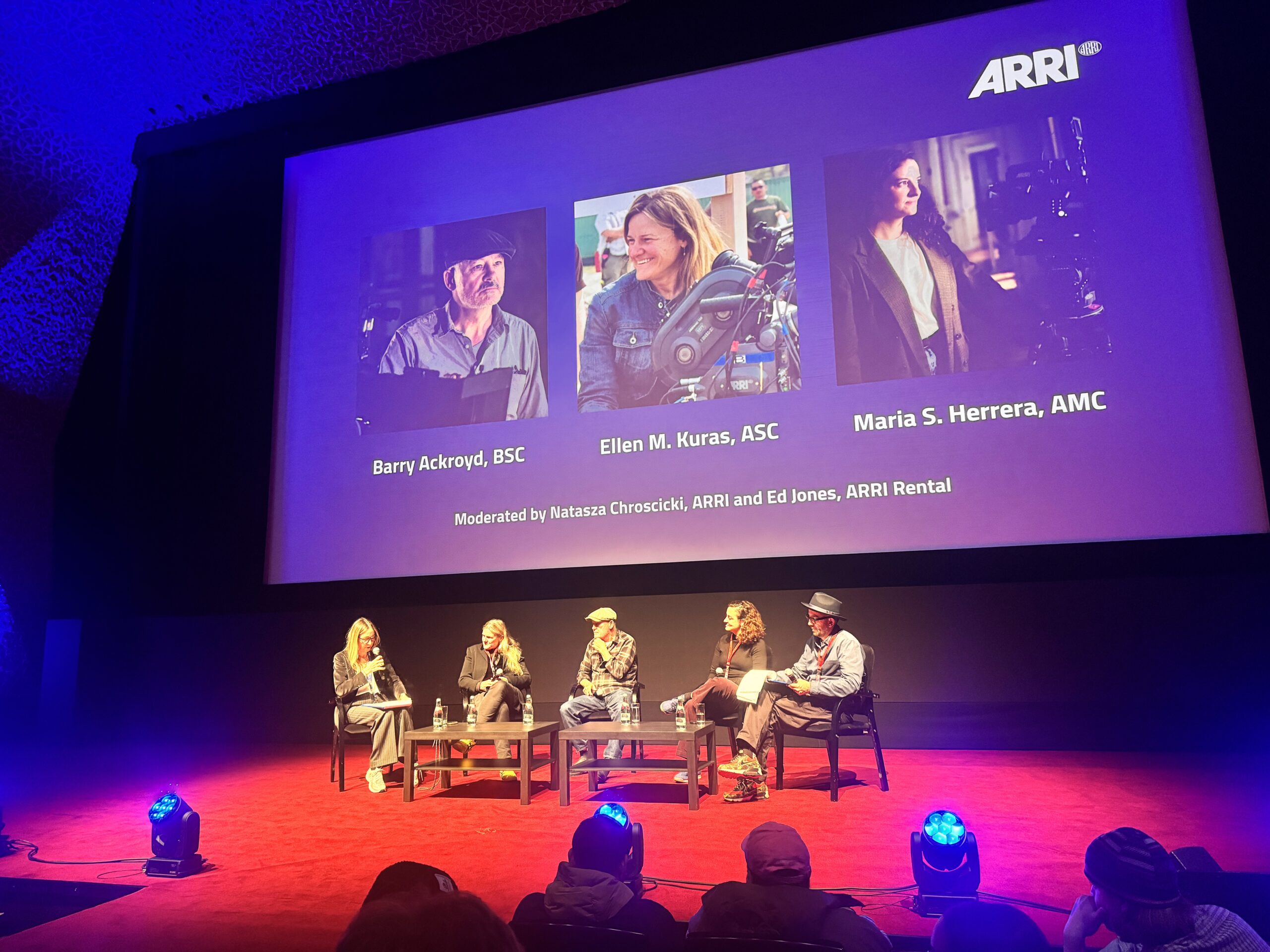
Ellen Kuras: Eternal Sunshine of The Spotless Mind
At an ARRI session, Ellen Kuras led a panel discussing her collaborations with Michel Gondry on Eternal Sunshine of The Spotless Mind. She described the script as it felt like “reading it upside down” — so structurally strange it forced her to rewire how she imagined every scene.
The team decided to go almost entirely handheld, with a single indie wheel chair dolly exception. On a project like Sarasvati Herrera – 100 Years of Solitude, she discussed shooting with Cooke optics on a Mini LF and carefully choreographed Steadicam work to place the camera inside the narrator’s gaze. A beautiful episodic series with all exteriors utilizing natural light. She mentioned that if the camera moves, it has to be for a reason.
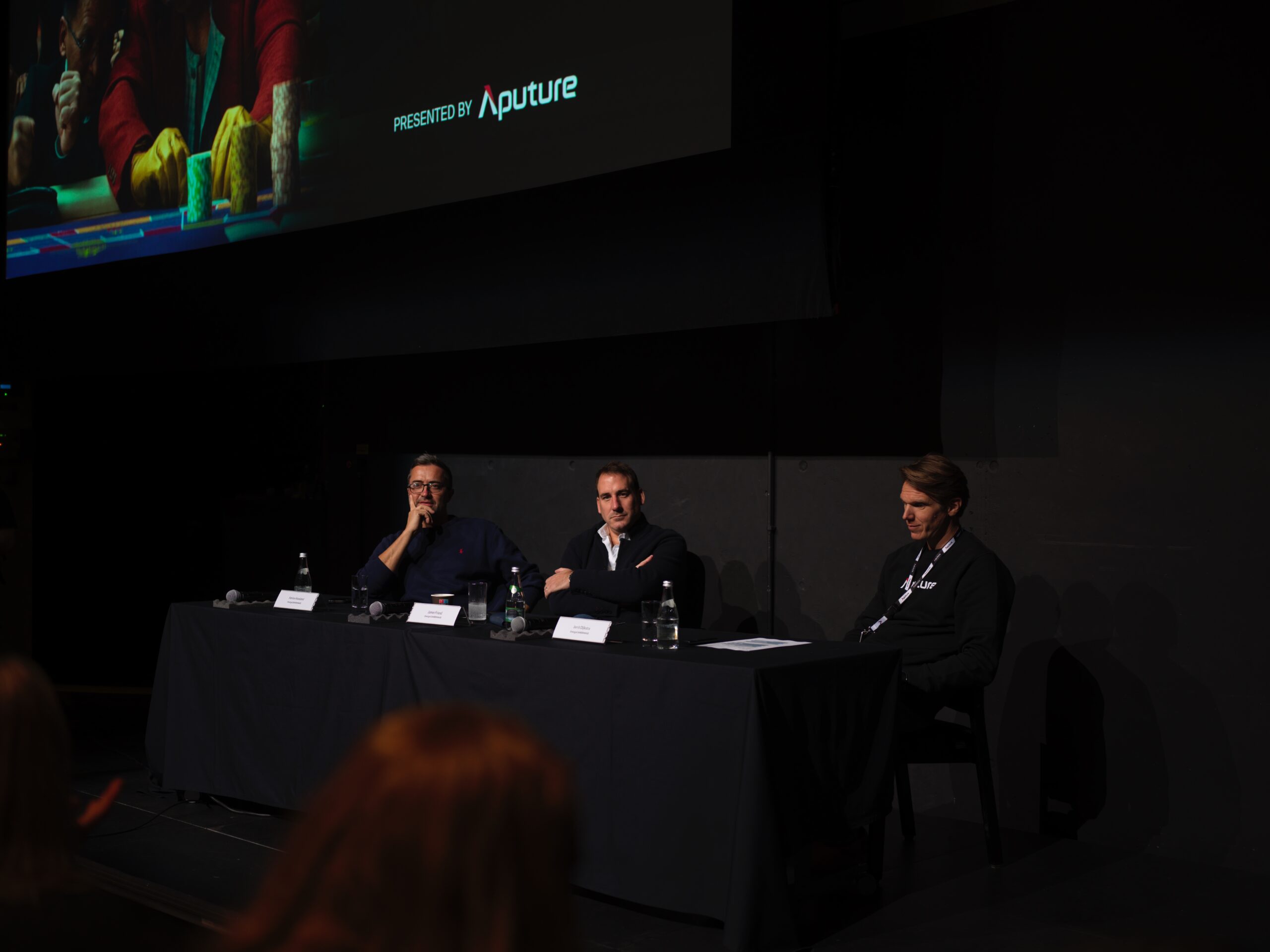
James Friend & Harlon Haveland: Casinos at 4 a.m.
For Ballad of a Small Player, shot in real casinos in Macau, China, James Friend and Harlon Haveland told stories that sounded half heist, half lighting seminar:
- Most of the biggest scenes were shot around 3–4 a.m., in narrow windows when high rollers slept and cameras were allowed onto the floor.
- A 20×20 diffusion frame hung on long-john arms became the secret weapon, swinging in and out to bathe gambling halls in controllable ambience.
- At one point, the lead actor took off down a corridor mid-take. Casino rules meant no one could yell “cut,” so they had to ride the chaos and trust the coverage.
- Test footage revealed that a lot of the practical light in Macau flickered, pushing a huge thank you to DaVinci Resolve’s flicker-removal tool.
These panels are a reminder as to why Camerimage is so special. Cinematographers are very honest with their challenges to create beautiful imagery, & yes, the grind, the negotiations, and the problem-solving is revealed behind every “effortless” frame.
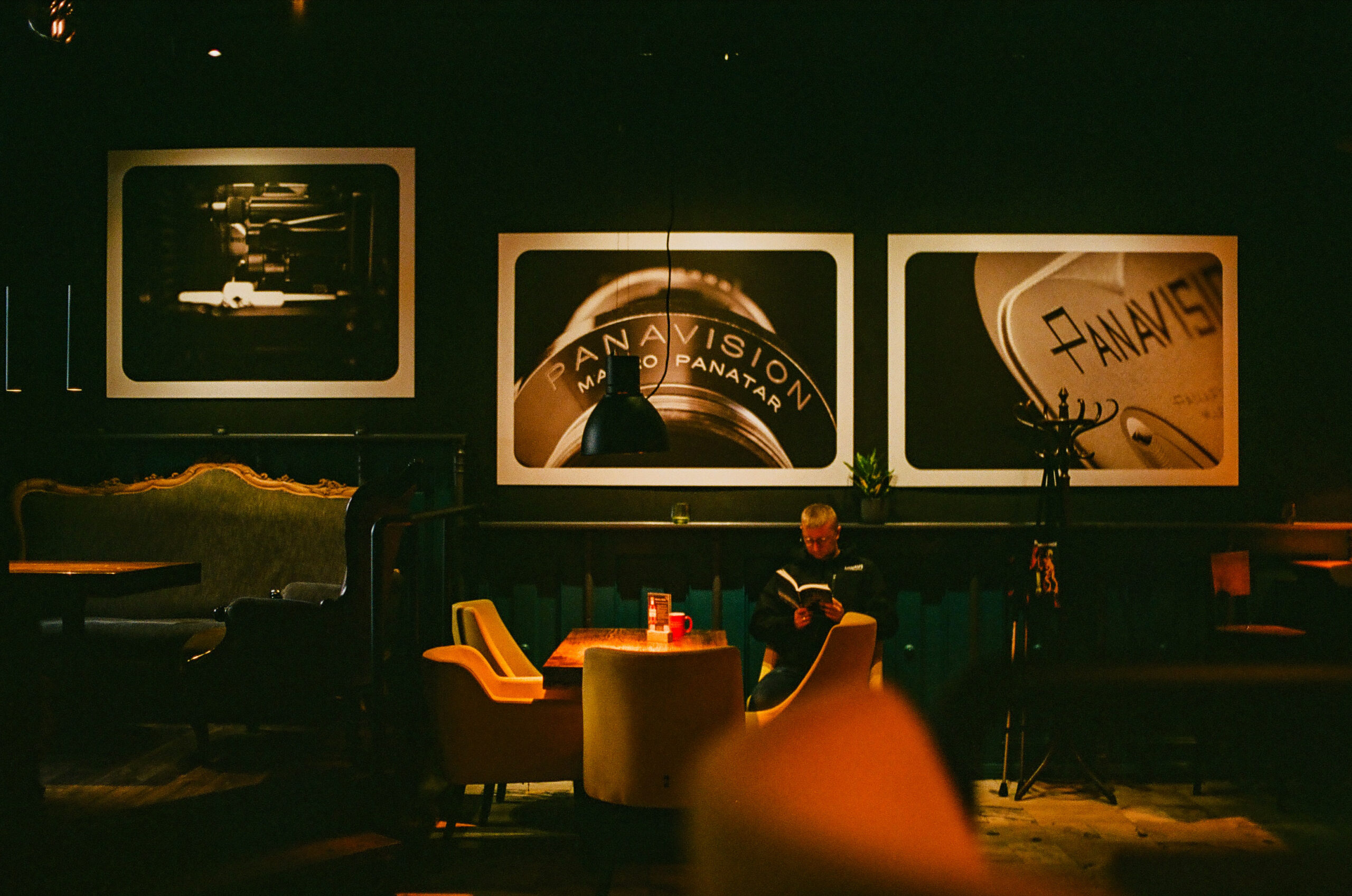
Panavision Clubhouse, Dream Productions & Finding Your People
In between the screenings and late-night bars, Camerimage has a unique way of bringing together people to form lifelong friendships. One afternoon at the Panavision Clubhouse at Kuranity, I found myself in a corner talking with gaffers, camera assistants, and DPs who all smilarly have a deep love for storytelling.
That’s where I ran into Dream Productions cinematographer Arjun Rihan, hearing his stories about cinematography on animated projects, and how the industry is ever evolving and changing. Moments like that might never end up on a festival program, but they’re the reason you make the trip: you meet people whose brains are wired similarly, even if they come from completely different corners of the industry.
That mix — a Dream Productions DP from one corner of the world, a gaffer from another, a Polish camera assistant showing BTS from the last year — makes Camerimage feel less like a hierarchy and more like a village. Everyone is somewhere between student and teacher, depending on the conversation.
Toruń as Cinematography Village
Scale is a big part of Camerimage’s magic. Toruń is small enough that people collide constantly. You spot the same faces in a morning ARRI workshop, an afternoon AFI masterclass, and then again sharing fries and a kebob at 1 a.m. outside a bar that just hosted Rosco’s lighting party.
Under CKK Jordanki, the EnergaCAMERIMAGE Market packs the lower level with ARRI, Sony, Panavision, RED, Blackmagic, Canon, Zeiss, Cooke, Fujifilm, Atlas, Leitz, Sigma, Aputure, Astera, and more. Upstairs, there might be a Fujifilm large-format session with Mauro Fiore. Down the hall, a mindfulness workshop. Outside, a Christmas tram rattles past banner ads for Golden Frog contenders.
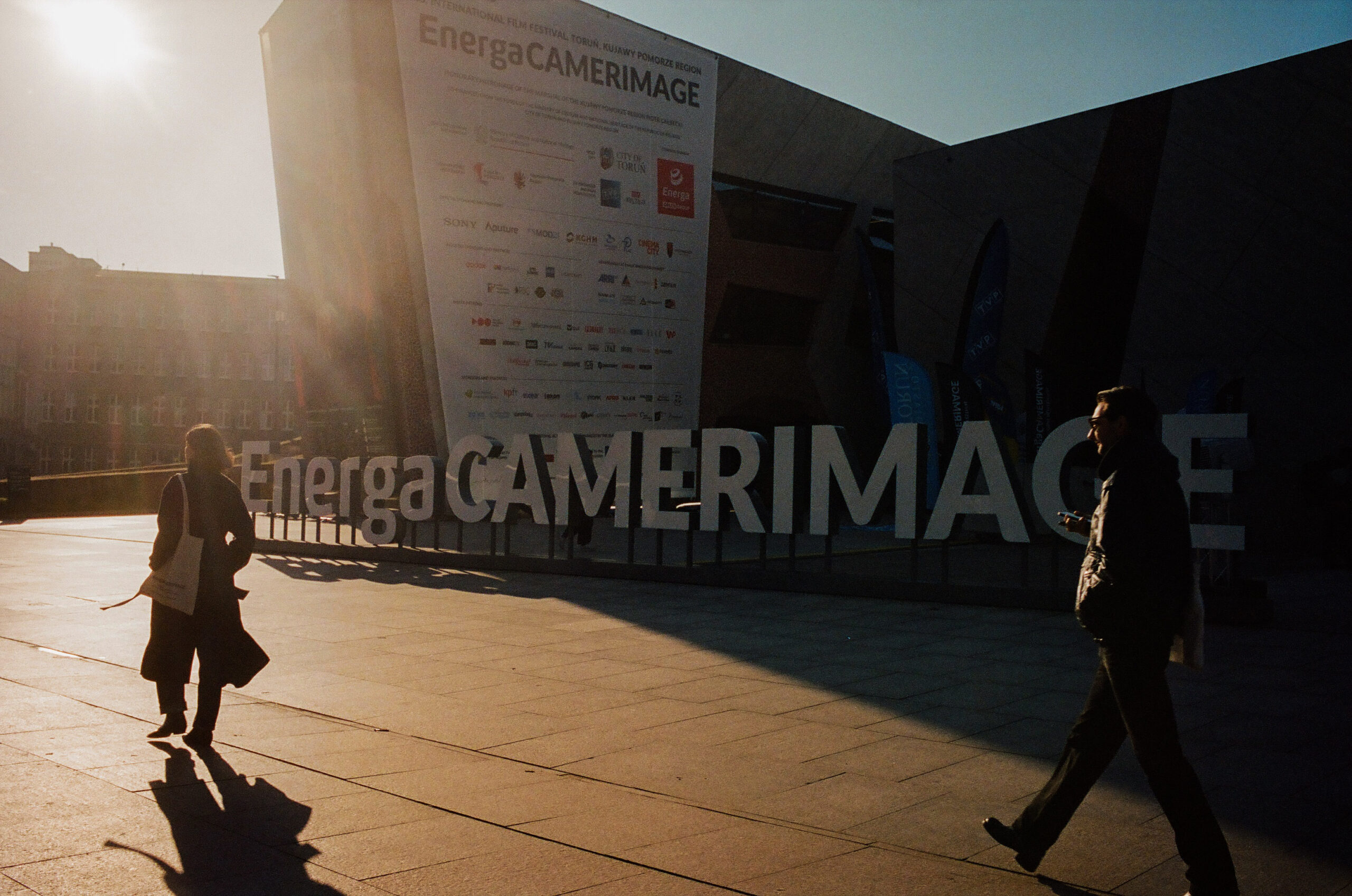
And then, just a few steps away, you’re back in the Christmas market. Gingerbread bakers, kids in winter coats, mulled wine, folk music and festival badges hanging over parkas. It’s impossible to separate the city from the event. Toruń isn’t just a backdrop; it’s a collaborator.
Why Camerimage Still Matters
Thirty-three years after its founding, Camerimage is still built around a simple, radical idea: cinematographers are authors. Awards are given primarily to DPs. Panels talk about lenses, lighting, workflow, and ethics.
In 2025, under Toruń’s Christmas lights and Lynch’s shadow, that mission felt especially sharp. Large-format experiments, AI anxieties, parties with Rosco and Kodak, a surprise DJ set by Robbie Ryan at NRD, long conversations at the Panavision Clubhouse, and brief connections with people like Dream Productions’ Arjun Rihan all folded into one week-long reminder:
The tools will keep changing. The codecs, sensors, AI models and workflows will all evolve. But in a dark room in Toruń, with snow starting to fall outside and a story unfolding on a screen, it’s still about the same thing it’s always been about: how light hits a face in a moment that matters, and the people behind the camera who decide what that looks like. There's also nothing better then getting together with familiar faces and sharing stories with creatives and dreamers.